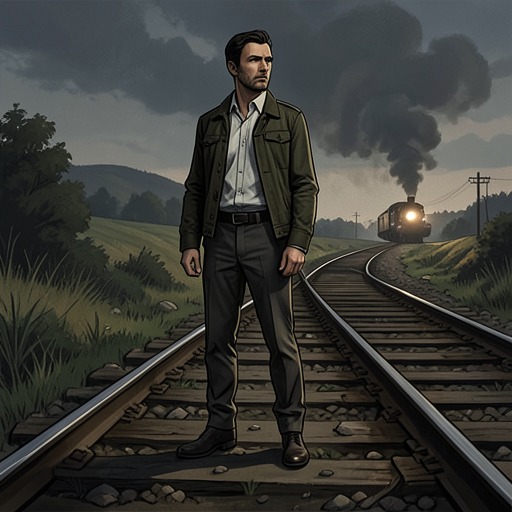
A man to be a man, a cloud to be a cloud, bamboo to be bamboo
The Narrow Road to the Deep NorthA man to be a man, a cloud to be a cloud, bamboo to be bamboo is an expression of freedom grounded in the right of each thing to exist in its own nature. It appears as the passage’s definition of “the highest form of living,” after the ruined railway has been returned to weather, animals, insects, and vegetation. The formulation gives human freedom a place in that wider living world rather than making humanity its sole measure.
Meaning and Form
The expression moves from a man, to a cloud, to bamboo. Its parallel structure gives each a distinct identity without ranking one above another. The repeated phrase “to be” presents freedom not as achievement or dominion, but as the possibility of being what one is. Its final image of bamboo makes the claim concrete in the surrounding landscape, where vegetation grows among the remnants of the railway.
Context and Significance
The passage sets this idea against the railway’s material aftermath: mass graves, human bones, broken tools, sleepers, and rusting rails are overtaken by seeds, weeds, rot, and ruin. The former work of human beings does not endure as a permanent monument; living processes continue without knowing or caring about it. In this context, the expression resists treating life as merely an instrument of human projects. It also sharpens the passage’s contrast between freedom and the coercive labor that built the railway: the line’s eventual disappearance leaves the freedom of living things, rather than imperial achievement, as the passage’s measure of life.